Wednesday, April 18

Schuberth S2 Helmet Review

Brand new for 2012, Schuberth has released their full face version of the extraordinarily popular C3 Modular Helmet. The brand new Schuberth S2 Helmet boasts many of the same qualities as the C3, including very low noise levels and excellent stability and balance, but is designed as an ideal choice for nearly every single riding application that doesn't involve the racetrack. Designed and priced as a super premium lid for the most sophisticated riders, the Schuberth S2 is going to be an absolute monster in 2012.

Check out our Schuberth S2 Review:


The Schuberth S2 Helmet utilizes a triple matrix shell consisting of fiberglass that is compressed in high heat settings under extreme amounts of pressure. A resin proprietary to Schuberth is added to the helmet shell in a vacuum for additional strength. Inside, the multi-density EPS liner is built for optimal shock and impact absorption. An additional safety feature is Schuberth's patented AROS (Anti-Roll-Off System) first seen in the C3. The AROS acts in a few ways to protect the rider in the event of a get-off scenario. The helmet can not rotate off the head from behind, there is a smaller angle of contact between the bottom of the helmet and the neck/chin of the rider, and it prevents trauma to the chest. The S2 Helmet is DOT and ECE certified.

Safety aside, let's get into the niceties of the S2 that may make it right for your application. First off, the quiet on this helmet is very close to meeting the 84dB of noise found in the C3. Since this is a full face helmet, the opening has to be a bit wider to get your head into it, whereas the C3 can be more snug given the fact that the chinbar flips down. In doing so, you only sacrifice 1dB of wind noise and the S2 measures in at 85dB of sound at 65mph. Pretty doggone quiet! The neck roll is fully encompassing to assist in sealing out wind noise and can be completely replaced by the SRCS Bluetooth system, which while be available in roughly six months and seamlessly integrates with the S2 as the SRC system did with the C3.

This brings us to the SRCS system, which Schuberth has developed in conjunction with Cardo, and may be one of the most attractive features of the new S2 Helmet. There are two antennas built into the shell for full band FM and bluetooth reception, and the S2 is the first helmet that ever comes pre-wired with a stunning 31 inches of dual band antenna. The result is reception that is comparable to being in an automobile. Also, you'll now have more than double the range of the C3's SRC system as it goes from 300 meters to 700 meters. Another key feature of the SRCS is that, since it is manufactured by Cardo, it is fully compatible with any other Cardo bluetooth units, including the SRC native to the C3. Big upgrades here.

At the bottom of the helmet, Schuberth has introduced their Full Circumference Down Force Spoiler, which wraps from the front chin and around to the back. This spoiler manages down force by essentially allowing the helmet to cut through the air and deflect up and over the helmet rather than under. Were this air to creep under, you'd experience significant buffeting and turbulence. The aerodynamics are aided further by the turbulators at the top of the shield that enable the helmet to further cut through the air and thereby move through it more easily. The shield of the S2 is the exact same as the C3, as it comes with posts for a Pinlock system and utilizes the same super simple on and off mechanism.

The Schuberth S2 also borrows the retractable internal sun visor used by the C3. Schuberth invented the first drop-down sun visor in the late 1980s, and has continued to iterate and improve it since. The visor uses a push/pull system with small cables that raise and lower it. We've found this in the C3 to be one of the better sun visor retraction mechanisms on the market and they don't seem to wear out over time. The inner visor is coated with an anti-scratch treatment but not anti-fog, as Schuberth found that their new ventilation scheme eliminates the possibility of the visor fogging. This brings us to what Schuberth has done with the ventilation of the S2.

The top intake vent on the S2 is identical to the top vent of the C3, but this helmet now features two exhaust vents built into the spoiler at the rear that were not seen in the C3. Inside, the vent channels in the EPS are cut in deeper than the exhaust vents themselves so air goes down and comes back up to create a vortex of airflow that creates more ventilation than the C3. The S2 moves 10 liters of air through the helmet while the C3 only moves roughly 7. The front chin vent uses a basic open/close mechanism and is designed more to balance CO2 within the helmet and help with the anti-fog properties.

Moving inside the helmet, all of the materials are made of Thermo-Cool from CoolMax® which is antibacterial, moisture-wicking and allergen free. The 3D nature of helmet liner is what Schuberth refers to as skeletonized and allows air to flow to the head. Everything inside, cheek pads and liner, is completely removable and washable; Schuberth says they can be machine-washed but must be air-dried. The crown liner replaces the C3's rubber flaps with streamlined "cat ears" that can be flipped up to close off the vents in cold weather or folded down to flow air in the hot weather. The closure is the same micro lock retention system seen in the C3 but now it is adjustable on both sides, so if you prefer it at the left or right of your chin, you can act as you please.

Lastly, the fit has been updated over the C3. While it shares the general "Schuberth shape," the S2 is much more accommodating for riders with longer oval head shapes. An additional improvement over the C3 is crown liner in the forehead area, which now features thicker memory-esque foam and a trimmed down seam that prevents the pressure point in the forehead about which so many C3 riders complained. The visor of the S2 also has a few detents, including a city setting that enables you to crack the faceshield slightly when cruising at low speeds. The shield also touts an Optical Class Clarity of 1, which is the highest possible rating.

The Schuberth S2 certainly features a ton of high-end technicalities that we were so pleased with in the C3. They have also addressed some minor issues that riders had complaints about on the C3. The result is one of the most super premium road riding helmets on the market today, suitable for any style of motorcycling. All Schuberth helmets are completely designed and manufactured in Germany by a small handful of elite Schuberth helmet specialists, and face a multitude of human checkpoints along the production process to ensure the highest possible standards of quality.
We think Schuberth has delivered another winner. Be sure to compare against other super premium motorcycle helmets before making a final decision.

-RetroZilla

Related:
Schuberth S2 Helmet First Look
Schuberth C3 Review
Schuberth Sizing Guide

AGV Diesel Hi-Jack Helmet

Fresh for 2012, we have the AGV Diesel Hi-Jack Helmet. A collaboration piece between the legendary Italian Jeans company, Diesel, and the engineers over at AGV, this is one open face helmet that screams style.

Check out our AGV Diesel Hi-Jack Helmet Review:


First off, let's talk about style. Built for intermediate oval head shapes, the Hi-Jack Helmet comes in five different color options giving you more of a choice to find the helmet that perfectly matches your style. Personally I'm a big fan of the white with stripes option and the helmet's aeronautic design with its distinct curve at the sides. The designers at Diesel really helped craft an open face that has its own unique, cafe rider feel. The helicopter pilot style, lightweight, fiberglass shell gives off an awesome shine that will have riders feeling confident as they go for a ride every time.


Looking at the guts, you'll notice before even getting into the helmet that it uses a quick release buckle that allows riders the ability to take it on and off with one hand while still wearing a glove. The helmet is equipped with a concealable visor that is offered in a variety of different tints that lets the helmet adapt to each rider's specific need. The internal padding is constructed out of Dri-Lex fabric that helps pull sweat away and feels nice against the skin. The liners are completely removable and washable. You'll notice the Diesel branding all over the 3D internal comfort liner that wraps around the top of your head. This liner is weaved to help flow some air through the helmet, but because this is an open face there are no vent holes. 

So if you're looking for an original and unconventional helmet that won't go unnoticed, the AGV Diesel Hi-Jack may just be the choice for you! Easily one of the most attractive open face helmets currently on the market, this puppy screams fashion and gives its rider a unique look.

Be sure to check out some comparable choices in our Open Face Helmets section.

Keep on Ridin,
YoungZilla

Tuesday, April 17

Cardo Scala Rider G9 Review

The Cardo Scala Rider G9 is the latest addition to the Cardo family that includes significant updates from its predecessor the G4. One of the most innovative bluetooth communicators out there for motorcyclists, the G9 utilizes advanced technology that really packs a punch with all its great features. 

Check out our Cardo Scala Rider G9 Review:


Starting off with the construction of the device itself, you'll notice right off the bat the larger buttons on the console which provide for easier navigation while wearing gloves. This is a big advantage to those that want to have convenience while riding and don't feel like fiddling with their gloves as they try to talk to their moms or set up music. Another great thing about the design of the Cardo G9 is that it comes with two microphone options. You can use a boom microphone that wraps easily under and into the helmet or you can simply set up a wired low-profile microphone directly on your helmet if you're going to be using it over and over again. 


Now let's go into some of the technical features of the G9. The system allows for up to nine people at once to be paired together. This is great for those of you riding in larger packs, but the system only allows for up to four riders to be able to talk at once in conference mode. It comes with a solid talk time of 13 hours and a standby time of a week just like the G4. The G9 is also capable of making mobile phone conference calls that allows the caller and both the rider and passenger to talk. The pairing system is really a breeze because it uses flash technology where you simply bump or touch the devices together and they automatically sync to one another. One of the more interesting features I found was the ability to find other G9 users and set up social groups based on a location or riding group through the social networking options.  

Riders should be aware that the G9 system does come with all the great features of the G4 system, and if you currently own a G4 you can upgrade your current system to match the G9. Some of the features of the new G9 include A2DP and Mp3 connectivity for stereo music, a built in FM radio with RDS smart scan, a noise cancelling microphone for clear conversations, a weather and dust resistant design providing ultimate functionality, a range of up to 1.6km in normal terrain, and upgradeable firmware for any system updates Cardo may put out in the future. 

In the end, if you're looking for a good, large or small group bluetooth communicator the G9 will cover all your needs and deliver much more. The makers at Cardo keep updating their systems and each time we like the improvements we've seen and can honestly say you won't be disappointed with this investment.

Keep on riding,

Monday, April 16

Interphone F5 Bluetooth 3.0 Intercom Review

The Interphone F5 Bluetooth 3.0 Intercom is the latest addition to the Interphone family and delivers a powerful package in comparison to its predecessor and competitors. What you're going to get is an Intercom system that provides great coverage and compatibility with a wide range of other Bluetooth devices.


Check out our Interphone F5 Bluetooth 3.0 Intercom Review:


Designed to be used for motorcyclists who like to travel in either pairs or groups, the F5 provides excellent conference communication for over 6 users. A great selling point to the F5 is its compatibility with other devices. You'll be able to link up with other Interphone F5 users, your cell phone, a GPS Bluetooth navigator, stereo music through the FM radio, and IPods or other MP3 players thanks to the 3.5 mm jack hook up. A nice feature to the radio is that it will automatically mute when a phone call is received giving the rider the ability to listen to music, but still be in touch with the outside world while riding. You're also going to be able to save up to 8 stations in the F5's memory for easy access to all your favorite music.

The range for the intercom system is going to change depending on how many riders you have at once. With a full conference of 6 riders on 6 different motorcycles you'll have up to 1.49 miles of communication, but with only two riders in conference mode you're restricted to a little less than a mile. (At the bottom is a detailed chart that goes over the range of communication per rider.)

The F5 has Voice-Activated commands when using your mobile phone functions which enables you to call, answer, or reject without having to hassle with any buttons while on the move. This provides a lot of convenience for any rider who wants to have complete hands-free control over their communication system.

Some other key features to the F5 are the Bluetooth 3.0, it's installable on any helmet, includes software that can be updated through a computer as Interphone releases them in the future, and provides 11 hours of talk time with a standby time that lasts over 700 hours! The F5 itself only takes about three hours to charge completely and comes with a chargeable lithium battery and battery charger.

Available for sale as a Single Unit or a Twin Pack, the Interphone F5 offers a lot to riders looking for the best communication system.

Be sure to check out our comparable choices in our Motorcycle Bluetooth Communicators section!

Keep on Riding,
YoungZilla
Related:
Sena SMH10 v4.0 Communicator Upgrade
U-Clear HBC100 Bluetooth Communicator Review
Interphone F4 Review

Monday, April 9

e-Tint AX-10 & MX-8 Tint Faceshield Insert Review

The e-Tint AX-10 & e-Tint MX-8 Tint Faceshield Inserts both offer great protection while riding from the glaring sun. Developed by the Air Force for use on Fighter Pilot Visors these LCD visor inserts are the world's first motorcycle insert that allows for electronic tint on demand. The difference between the two models is that the MX-8 is all manual, but for a little more the AX-10 comes with the ability to automatically adjust on and off with changing light scenarios.

Check out our  e-Tint AX-10 & e-Tint MX-8 Review:


The Tint system comes with 15 through 20 hours of usage time. You're only using power when the Tint is on and once the charge is used up the visor comes with a fail-safe that will revert it to the clear vision as opposed to leaving the tint up. This we found to be more ideal because you wouldn't want to be caught in a situation where your visor died in tinted mode near night time.

Diving into some of the construction and design of the e-Tint Inserts, you'll see that it is a two person installation. You're working with a thin LCD screen that will stick to your visor, but you have to be careful because any crinkle can damage the screen, but once it's on you're ready to rock and roll. The UV Protection is going to cut down on the sun's harsh glare and makes riding on a sunny day a breeze. The lithium battery is rechargeable through USB which it comes with. The system really couldn't be easier to operate. Simply click the one rubber button to turn the tint on or off. If you have the AX-10, you can just switch to the auto and let the visor take over for you.

Something riders should be aware of though is that this system will not work in all helmets. The MX-8 is not compatible specifically with the Arai, HJC RPS-10, and Shark Evoline helmets. The AX-10 is not compatible with the HJC RPS-10 or Shark Evoline, but you can order the AX-10 Arai for Arai helmets and the AX-10 Universal for all others. The HJC RPS-10 and Shark Evoline both use anti-fog coatings on their visors that actually reacts with the sticky side of the e-Tint making it unable to adhere to the helmet.

A thing to note about the AX-10's auto feature is that our riders did notice that it was a little sensitive and if you're riding through an area where sunlight is broken up such as through a forest or city the flickering of the tint turning on and off can become a bit distracting. If this happens, it's easily corrected by simply turning it to manual and either leaving it on or off as you see best. 

When it comes down to it, the e-Tint AX-10 & e-Tint MX-8 Tint Faceshield Inserts are very impressive and offer a solution to riders who don't feel like dealing with sunglasses or multiple visors. It's a purchase you'll find convenient every time you climb on your bike and the sun is glaring down on you.

Keep on riding,
YoungZilla

Sena SMH10 v4.0 Communicator Firmware Upgrade

The newest version of one of the bestselling bluetooth communicators on the market has arrived, in the form of the Sena SMH10 v4.0. The SMH10 v4.0 integrated Bluetooth 3.0 technology, which boasts serious improvements over 2.0. We've seen the SMH10 be a home run amongst all kinds of riders, and the v4.0 upgrade is certain to continue its success.

Some notable feature upgrades for the Sena SMH10 v4.0 include:

  • four-way conference intercom - version v2.0 only allowed two-way conferencing
  • conference phone call via your cell phone with another intercom participant
  • voice prompts, enabling you to command actions
  • improved overall sound quality
 Riders currently using the Sena SMH10 v2.0 can also upgrade the firmware on Sena's website for free.

Another step forward from one of the most popular communicators in the game. Check out our Sena SMH10 Review:


-RetroZilla

Thursday, April 5

Fox V4 Helmet Review

The developers at Fox have been working diligently to create a much more evolved version of their V3 Helmet with the new Fox V4 Helmet. The goal behind creating the V4 was making a helmet that didn't just outperform all other premium dirt helmets, but also one that was able to go head to head with some of the best helmets on the market. I have to say they did just that! The V4 offers some great features that provide comfort, protection, and style for any rider.

Check out our Fox V4 Helmet Review:


Designed and developed completely by Fox engineers in California, the V4 has a brand new layout from its predecessor. Some of the most notable features are its removable single mouthguard, the integrated roost guard, and the screened off intake and exhaust ports that allow cool air to enter the helmet, but keep unwanted material such as mud out.

Starting with the shell, one of the biggest changes Fox made from the V3 to the V4 is now the helmet is completely constructed out of carbon fiber where the V3 was a composite made of fiberglass and carbon fiber. This allows the V4 to be significantly lighter, but doesn't sacrifice protection. Carbon fiber helmets are some of the lightest helmets on the market that still meet or exceed the necessary safety standards. What makes carbon fiber helmets so safe is that they are able to better absorb forces of impact than most other helmet material while the fiber weave design makes it less likely for objects to penetrate through the shell. Another highlight of the V4 is the use of dual density EPS liner, which has a dense outside, but soft interior for excellent impact protection. A true triumph for this helmet is how it not only meets, but exceeds the Shell 2012 & DOT standards giving it the prestige it deserves.

One of the other most notable improvements Fox made to the shell of the V4 is that it comes in four different sizes as opposed to only two in the V3. The shell is available in XS/SM, MD, LG, and XL/XXL. The liner and cheek pad thickness is the same for the SM-XL. Liners are specific to EPS sizes and cheek pads are interchangeable throughout all the sizes. All the size changes happen with the EPS and shell grading. With all these options, the designers at Fox really made sure to give the V4 the ability to get a precise fit for every head size.

The V4 has a luxury interior that provides comfort and keeps the rider cool and dry. With a DRY LEX comfort liner installed, the helmet provides a comfortable feel against the skin that also wicks away any moisture or sweat. It has a new cheek pad design that wraps below the jaw line to create a tight and secure fit that molds to the rider's face while still providing comfort. All of the guts are fully removable and washable.

Above all else, the V4 is designed to keep the rider cool under any circumstances from a light ride to competitive racing. It's equipped with 16 intake and 8 exhaust ports that are designed to circulate an impressive amount of airflow throughout the helmet. This is one of the first features that riders will notice right off the bat. Air is able to flow across the rider's face even at low speeds. Also, 4 large brow/goggle intake ports pull air in and over the face keeping the rider cool and the visor from fogging up.  The channeled EPS liner works in unison with the large channels built into the shell. With all these features working together, the venting system on the Fox V4 is one of the most impressive cooling systems that we've seen on a dirt helmet.

Believe me when I say this helmet isn't just for show. Professional riders such as Ryan Dungey, Chad Reed, and Ken Roczen have all worn the V4 along with several others. The V4 comes available in three different and distinct styles: Fox V4 Rockstar, Fox V4 Flight, and Fox V4 Future.

Be sure to check out comparable choices in our Motocross Helmets section.

Keep on riding,
YoungZilla

Related:
Fox V4 Helmet Preview
Fox Instinct Boots Review
Fox V3 Helmet Review

Tuesday, March 27

AGV Pista GP Helmet Review

AGV has been busy in the lab for the last several months, toiling away at a brand new helmet we just got a first glimpse of thanks to Valentino Rossi during the Sepang MotoGP test rides. The new pro-level AGV Pista GP Helmet, along with its baby brother, the AGV Pista, is slated to take over for the GP Tech in 2013 for the general riding public. That said, we'll ultimately get to watch Vale wear it all season before we can get our grubby hands on one. The AGV STANDARDS team has been working since 2009 on Project 46, the codename for the AGV Corsa lid, and the result is a significantly lighter, more protective, more comfortable, more ventilating, and aerodynamically improved helmet. I know, it sounds insane, but this really might be the new mountaintop for racing helmets. Let's get into exactly why I make this reckless claim.

Click any of the images to see them in a much larger view.

First, let's start with how AGV begin the process of building this helmet. Rather than the standard method of building a helmet shell, and then filling in the guts, the development of the AGV Pista GP began with a laser scan of Rossi's head. This three-dimensional laser scanning that is accurate to 1/10 of a millimeter, converts to digital data, and enables engineers to mold the AGV Pista ergonomically around the rider's facial and skull contours. Utilizing this data, AGV uses different densities of foam against the face that match its contours but also take into account the rider's positioning to optimize the manner in which the face is cradled. By studying the rider's position in tuck, the visor has been adjusted accordingly and now offers a 9% overall improvement in field of view (and 15º more upward vision) specific to a sportbike.

There are several tests and figures used by AGV when creating the safest helmet they possibly can. After the 3D laser scanning, they have a mathematical model of the helmet from which they can perform analyses of the helmet in computer-generated crash scenarios. In addition to real world testing, the computer crash tests allow them to modify the helmet structure along the way a greater number of times, since physical shells aren't actually being destroyed. More simulated crash testing equals a more protective lid, and AGV's work with mechanical engineers from the University of Padua during this process will ensure that the AGV Pista is as protective as it can be. The AGV Pista and Pista GP will ultimately transmit 31% less impact force to the head than what is required of the official EU safety standard. In addition, the HIC index (head injury criterion) of the Pista, which measures the level of brain trauma risk due to impact, ranks 48% lower than the official standard.

The shell of the AGV Pista GP (as seen on Rossi) is full carbon fiber, while the shell on the regular AGV Pista is a carbon fiber, kevlar and fiberglass weave. AGV has done extensive wind tunnel testing with the new Pista line, to measure several metrics and ultimately produce the best helmet they could. These include the aerodynamic drag coefficient, dB of airflow outside and noise inside the helmet, the heat exchange of ventilation to determine the amount of heat and moisture pulled from the rider's head, and the measurement of buffeting and lift. The aerodynamic resistance has been reduced by 17% over the GP Tech. This value measures the amount of stress passed to the neck of a rider, and with a reduction in this value, the result is more comfort and less fatigue.

Moving from the GP Tech to the Pista GP has resulted in a serious increase in ventilation from what was already one of the best venting race helmets on the market. There is now 193% more vent surface in the PistaGP than in the GP Tech. Using extensive wind tunnel testing, AGV Standards developed an airflow system that is extraordinarily effective at pulling heat, hot air and humidity away from the helmet.

The list of upgrades on this helmet is out of control and we absolutely can not wait to get our hands on one of these for a track test. We'll be delivering a detailed breakdown of the brand new AGV Pista GP Helmet and AGV Pista Helmet as soon as possible.

-RetroZilla

Tuesday, March 20

Fox Racing V4 Helmet Preview


New for 2012, the Fox Racing V4 Helmet is gunning for the top spot in the MX and SX helmet realm. Designed from the ground up and currently being worn by Chad Reed and Ryan Dungey in SX for the 2012 season, the Fox V4 is strides ahead of its predecessor, the V3. With much-improved shape, fit, balance, and an extreme amount of venting, there is no reason why this helmet shouldn't compete directly with the top offerings from Shoei, Bell and Arai. Add to that the support from today's top Supercross riders, and there is no doubt the Fox V4 Helmet will make a big splash in the industry.

Check out some of the bullet points below to read about the upgrades, and stay tuned for our detailed video review coming very soon.

PREMIUM FIT:
  • Cheek pad design wraps around the riders jaw line to create a secure fit.
  • Comfort liner provides a balanced, custom feel.
SHELL SIZING:
  • 4 Shell & EPS Sizes for a precise fit (XS-S, M, L, XL-XXL).
  • Dual Density EPS Liner: Anatomically correct, impact absorbing foam reacts positively to impact & widens the energy dispersal area (Firmer outside / Softer inner).
ADVANCED MATERIALS:
  • Carbon fiber composite shell construction. Astonishing high tensile strength of carbon-fiber is a distinct advantage.
  • Exceeds Snell 2010 & DOT Standards.
LUXURY INTERIOR:
  • DRY LEX™ comfort liner wicks moisture & provides a comfortable feel.
  • Cheek pads feature a cupped lower edge design to mold to the riders face.
VENTING:
  • 16 Intake & 8 Exhaust Ports are designed to circulate serious airflow throughout the helmet.
  • 4 large brow/goggle intake ports pull air in & over the face.
DESIGNED & ENGINEERED IN CA:
  • Designed & developed exclusively by Fox engineers in California to exceed the needs of the world’s most demanding sport: Motocross.
  • Removable single mouthguard.
  • Integrated roostguard.
  •  Aluminum visor screws.
  • Screened off Intake & Exhaust ports let cool air in & keep the mud out.
The V4 will available in the following versions: Fox V4 Flight Helmet, Fox V4 Future Helmet, and Fox V4 Rockstar Helmet.

-RetroZilla

Dainese VR46 Leather Jacket Review

Brand new for 2012, the Dainese VR46 Leather Jacket is after the hearts of Valentino Rossi fans far and wide. The VR46 Leather Jacket is built on the chassis of the Dainese Racing Leather Jacket, one of the most popular Dainese leather jackets. This jacket strips the Racing Leather of its branding, retains all of the standout features and technologies, and tastefully adds Rossi's hi-viz yellow color accents throughout, including the "VR46" logo. Alongside the similarly-styled VR46 Textile, the new Rossi Replica Gauntlets, and the VR46 Sport Gloves, the VR46 Leather Jacket is one of many in a formidable line from Dainese that pays homage to the greatest racer of all time.

Check out our Dainese VR46 Leather Jacket Review:


Constructed of premium 1.2mm Italian cowhide leather, the VR46 Leather Jacket has protection, style and comfort in mind. At the shoulders, Dainese uses co-injected CE rated armor topped by aluminum hard parts, protecting from impact while enabling sliding in a get-off scenario. The elbows are using Dainese CE rated armor that extends all the way down nearly to the wrist for ample protection. There is also a pocket in the back of the jacket that will house a Dainese CE rated back protector, so you can really bulk up the protection that this jacket offers. There are additional foam injections on the biceps and at the back that add another element of protection in addition to a nice style.


For comfort and airflow, the Dainese VR46 Leather Jacket has strategic S1 stretch paneling which allows mobility when in the tucked riding position. At the backs of the elbows and biceps, there are elasticated leather panels in addition to reflective inserts. There is a full 360º zip to connect this jacket to a pair of leather pants and get you on the track as well. Internally, the mesh comfort liner has a sanitized treatment to ensure that it won't get funky. There are air intakes at the chest with exhausts at the lower back. It's the small details, like the neon yellow stitching used in areas like the arms and back, that really set this jacket apart from the rest and make it uniquely Rossi in nature. Alternatively, if you've gotta be uniquely Rossi in nature, just sport the AGV Corsa Turtle Helmet.

-RetroZilla

Also view the Dainese VR46 Textile Jacket overview:


Related:
Dainese 2012 Leather Jackets
Dainese 2011 Leather Jackets
Dainese Alien Leather Jacket Review
Dainese Rebel Leather Jacket Review

Monday, March 19

Roland Sands Design Motorcycle Gloves

Brand new for 2012, Roland Sands Design Motorcycle Gear is a new line of heritage-inspired products that will appeal to any rider with an old-school mentality. With a slew of jackets that are designed for everyone from the café racer to the cruiser to the flat track rider, the RSD Gear lineup has something for a wide array of riders. All the Roland Sands Gear is utilizing premium materials with extreme attention to detail, and this is true of the Roland Sands Gloves lineup. There are three gloves in the lineup, for three different riding styles, with something sure to appeal to many riders out there.

First up is our Roland Sands Design Diesel Gloves Review:


The Roland Sands Design Diesel is a short cuff, Euro-inspired glove that is unlike anything else we carry. Constructed of premium grade A cowhide leather and accented with RSD nuances, such as the circle RSD logo on the strap, the RSD Diesel Gloves provide solid performance and protection. There is extensive flex ribbing at the backhand for mobility, with foam reinforcements on the fingers and double-layer leather at the palm for resistance to abrasion and wear. The fingers of the RSD Diesel feature a precurve for ergonomics and short cuff closure uses a short zip and velcro strap. We're big fans of the RSD Diesel Gloves, available in black and brown color options.

Next is the Roland Sands Design Mission Gloves Review:


Offering a slight upgrade in protection and a distinct difference in style, the Roland Sands Mission Gloves pair up perfectly with the Roland Sands Mission Jacket. Available in a black/gunmetal and sand/brown colorway, the RSD Mission Gloves use premium grade A cowhide, with perforated panels for airflow and comfort. There is reinforced padding at the palm, with extra layers of leather, and old-school rivets to aid in sliding/protection in a get off. The padded knuckles are actually constructed on their own panel, working with the pre-curved fingers to provide solid ergonomics. The short cuff closure system uses a velcro panel along with an RSD circle logo embossed snap.

Last, the full gauntlet in the line, our Roland Sands Design Domino Gloves Review:


The Roland Sands Domino Gloves are a full-length gauntlet that offer a classic, heritage race style. Constructed of the same premium cowhide seen in the other two gloves in the line, the RSD Domino Gloves are essentially an extension of what we see in the Mission. The Domino Gloves offer the protection of a full-length gauntlet, with leather reinforcements at the palm, foam inserts for impact protection, and old-school rivets at the base and side of the palm to help with a slide in a get-off. Flex ribbing and pre-curved fingers allow for ease of mobility while strategic perforation gets the air flowing through this glove. If you're looking for full gauntlet protection with heritage style sensibilities, look no further than the Roland Sands Domino.

-RetroZilla

Related:
Roland Sands Jackets

Tuesday, March 13

Heidenau K60 Scout Tires Review

Brand new to RevZilla.com, the Heidenau K60 Scout Tires have quickly ascended the ranks as one of our most popular 50/50 on and off-road tires. Riders so far have a great experience with the Heidenau K60 Scout, finding them to provide excellent longevity coupled with good grip particularly on the shoulders. The large grooves in the chevron-style tread pattern also enable dirt to be quickly expelled when riding these tires off-road. Heidenau has been in the rubber and tire business for decades, and the Heidenau K60 Scout Rear Tires and front tires are truly a pinnacle achievement for their brand.

Check out our Heidenau K60 Scout Tire Review:


Thus far, we've heard nothing but positive feedback from ADV riders using the Heidenau K60 Scout Tires. Other than the very specific rubber compound used by Heidenau, there are some other key features to the K60 Scouts that set them apart. First, different tire sizes in the rear use different tread designs. Heidenau K60 Scout Rear Tires for larger, higher torque bikes have a larger reinforced block pattern which ensures that they remain firmly planted on the road. However, the tread spacing and depth is enough to bite in the dirt and force chunks aside. This isn't necessary for smaller bikes, so Heidenau maintains a smaller reinforced block. By varying these specs based on the bike's application, Heideanu is able to deliver the best possible compromise between on-road and off-road performance for a motorcycle tire.

We look forward to logging a ton of miles on these tires this year. Stay tuned for our opinion review to come. For the 90/10 tire from Heidenau, check out the Heidenau K76 Rear Tire.

-RetroZilla

Related:
Heidenau K76 Tires Review

Thursday, March 8

Roland Sands Design Motorcycle Gear

Brand new for 2012, Roland Sands Design Motorcycle Gear is a new line of apparel designed for the retro-minded, über stylish rider out there. This line is unlike anything else we see in the industry at present time: a premium collection inspired by the old school and delivering a heritage look and feel with moto-specific protection capabilities and comfort. With a full line of leather and textile jackets, gloves and the "gentleman's starter kit" (which is a dopp kit, along with several wallets), Roland is looking to take a smash in the apparel side of things this year. Check out some of the highlights of the line below, and be sure not to miss our detailed blogs and video reviews of the entire line.

First up is the standout leather jacket in the collection in our opinion. The Roland Sands Design Ronin Leather Jacket has full motorcycle functionality with a style that screams old school. This is a classic leather jacket from a style standpoint but features pockets for the RSD/Forcefield CE rated armor at the shoulder, elbow and back. The premium 1.2mm grade A cowhide requires a five-day process of hand-finishing, washing and waxing for an excellent feel, finish and even smell. The RSD Ronin Jacket is a café inspired piece, with a shorty collar, front zip pockets, pre-curved sleeves and a performance race fit. There is strategic perforation for airflow and zippered waist gussets for a solid fit. Ultimately, the Ronin comes down to the details: premium RSD-embossed snaps, YKK zips and quality stitching define the look and feel of this standout leather option.

Roland Sands Design Ronin Leather Jacket Review:


The Roland Sands Design Turbine Leather Jacket is another excellent choice in the throwback RSD leather collection. The Turbine uses the same leather as the Ronin, in addition to the five-day leather treatment process. The RSD Turbine Jacket has a unique style with its grommeted vent holes (amongst other grommets), short collar, and assymetrical pockets. The Turbine also has additional layers of leather in impact abrasion areas, at the shoulders, elbows and back. The interior features a soft satin liner with a special heat-embossed Roland "numbers" design that comes straight from his sketchbook! The Turbine also features pockets at the shoulders, elbows and back for CE rated RSD/Forcefield armor.

Roland Sands Design Turbine Leather Jacket Review:


The name of the Roland Sands Design Rocker Leather Jacket sort of says everything you need to know about this jacket. It is styled after the rock-n-roll jackets that we've seen for the past thirty years, and it incorporates modern day motorcycle functionality. There are pockets in the shoulders, elbows and back for the CE rated RSD/Forcefield armor, strategic steel rivets for reinforcement and perforation for airflow. The fit is designed to be comfortable in the riding position, and there are pre-curved sleeves and a drop tail. One really cool feature of this jacket is the additional treatment on the premium grade A cowhide that will wear and distress in its own manner based on your body and riding style. This is just another factor that makes this jacket incredibly unique.

Roland Sands Design Rocker Leather Jacket Review:


The Roland Sands Design Mission Leather Jacket is an American dirt track style jacket laced with old-school style and motorcycle riding performance. All the classic tracker features are there, with the strategic stretch paneling, zip pockets and the shorty race collar. The leather used here is the same as in the Rocker, and its additional layer will allow it to distress in an extremely unique and original manner. There are pockets in the shoulders, elbows and back for CE rated Forcefield/RSD armor in addition to external padding in strategic regions. The drop tail features a stitched and embossed RSD logo for style and the super comfortable satin interior features a custom Roland graphic design. Another dope piece in the lineup.

Roland Sands Design Mission Leather Jacket Review:


The last jacket in the RSD lineup that will accept armor is the Roland Sands Design Tracker Jacket. The Tracker jacket achieves what many jackets in the industry try to manufacture: it utilizes authentic US-made Martexin-waxed Shelter Tent cotton, a material used back in the day by the US Military (yes, in their tents). It has quite a unique look and feel to it and includes an extra container of Martexin Original Wax so you can continue to embrace that classic look and feel with new applications. This jacket is fully prepared to accept to the CE rated RSD/Forcefield armor to aid in protection from impact. This classic waxed cotton is proven to be comfortable and durable thanks to years of it being in use.

Roland Sands Design Tracker Jacket Review:


Stay tuned for more write-ups about this new line as we release them.

-RetroZilla

Related:
RSD Gloves

Monday, March 5

Bell RS-1 2012 Helmet Graphics

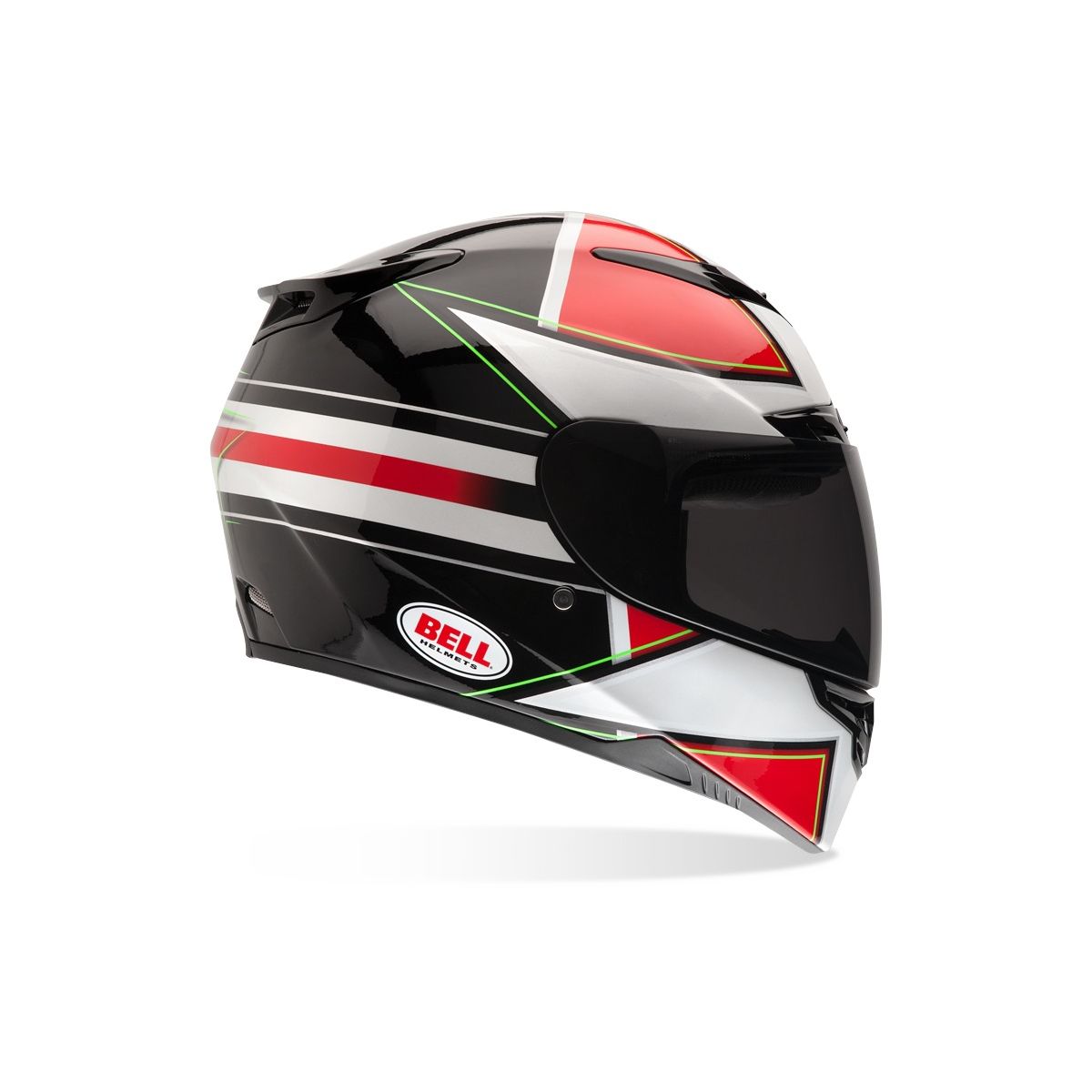
Bell has released two new graphics of the Bell RS-1 Helmet for spring 2012, and we're definitely fans of where they went with these designs. Check them out below, let us know what you think, and stay tuned for our HD video graphic overviews coming soon.

Click to see larger versions of the images.

Bell RS-1 Stellar Helmet Review:


Bell RS-1 Stellar Helmet

Bell RS-1 Gearhead Helmet Review:

Related Posts with Thumbnails